
“The thing about us, we were just a group of music fans, really”: Inspiral Carpets on old gigs, old memories, and Oldham
It’s not everyday that the opportunity crops up to interview a musical legend from your hometown, especially when your hometown is Oldham. Known over the years for its contributions to the Industrial Revolution, being the home of the first IVF baby, the legendary Oldham Athletic Football Club, bustling Tommyfield Market and the many talented performers to come out of Oldham Theatre Workshop, it is a place with a dense and impactful past. However, nowadays there seems to be a bit of a grey cloud over the town (literally and figuratively).
Famous names like Brian Cox, Sarah Lancashire, and Olivia Cooke have come out of Oldham. But, a group who truly put the town on the map after making a strong mark on the Mancunian music scene in 1980s and ‘90s was Inspiral Carpets. Forming in 1983, just a year after the mythical Haçienda nightclub opened in Manchester city centre and began to turn people’s heads, Inspiral Carpets was initially made up of Stephen Holt on vocals, Graham Lambert on guitar and Tony Welsh on bass, being joined shortly after by Craig Gill on drums and Clint Boon on keyboards. Ahead of their UK dates this November and December, I had the pleasure of chatting to lead singer Stephen Holt, all about the formation of the band, their journey over the years and upcoming album as well as the future of music in Manchester.
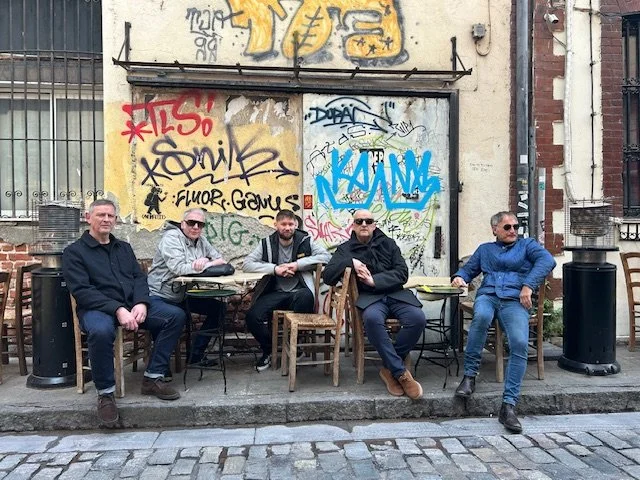
Inspiral Carpets formed in 1983, just a year after the opening of the Haçienda in Manchester city centre. The city, and wider region was beginning to be viewed under a magnifying glass and celebrated for its renowned music and clubbing scene. What was it like to come form a band during this time?
It was quite weird really because we weren’t aware of, I hate the term, but the “Madchester bubble” until a little bit later. At the time, there were quite a few bands coming through. I remember spending a lot of time with Happy Mondays back in the day, we knew Stone Roses and things like that but it wasn’t really that Madchester bubble until a few years later around ‘87-‘88.
We had so many bass players back in those days, it was unbelievable and we nicked drummers from places as well. There was more of an Oldham scene going on really that we were aware of. There were bands like The Jerks, Turning Blue, Dead Heroes, that weren’t your typical Oldham band. They weren’t doing covers, they were doing original music. It was quite a nice scene. There was a great band that Clint [Boon] used to manage called T’challa Grid. I think if they would have continued they would have been really successful. They were kind of an Echo and the Bunnymen or U2 of Oldham.
As every band does we were doing pub gigs in Oldham and we got pretty lucky really because our name was getting out a little bit in Manchester. There was a great club at that time called The Boardwalk. All the best indie gigs were on at The Boardwalk. We spent a lot of time there and me and Graham [Lambert] went on to do a bit of DJing there. It seemed for us, once you were into that Manchester scene, things started to snowball. From there we did a flexi disk recording for a magazine called Debris, which Dave Haslam used to run. You start to get to know these people and it seemed as though doors were opening all of the time. I loved those early days, it was great. None of us ever thought we were going to turn into the size of band that we become and I don’t think any of us thought we would still be doing this in our 60s either! We used to slag bands off who were still around like “leave it to the youngsters”. Things are slightly different now for us.
You described it as a bubble which is the perfect word for it because it was such a community-based thing. I completed my dissertation on the Haçienda and the city’s nightlife and what place that holds within Manchester now. You see these names who pop up all of the time.
In terms of the Hacienda, looking back, New Order and Tony Wilson were spending a lot of time in America in those days and seeing disco, house, and where that was going. I think they saw that warehouses were really trendy and popular. They were the first ones to do it in the UK and what was a traditional venue turned out to be this bloody world famous club. I never saw it coming at all… Tony Wilson was such a visionary. He was so ahead of his time on everything, even when he was doing television, the sorts of bands he was bringing on! Way ahead of his time.
You hear so much about the centre of Manchester but what was it like in Oldham at the time? I hear that the nightlife was pretty lively and very different to today.
There was a lively, dangerous nightlife going on which lasted for a few years. It actually had a great music scene when me, Stephen and Clint would be around. Loads of Manchester bands: Mani from The Stone Roses and Primal Scream, Chris Goodwin who drummed in The High and the Inspirals as well, they used to hang around in pubs where they’d have indie nights. The Tommyfield near the market used to do it and then there was one called The Grey Horse which was a great venue where they’d put gigs on. There were a lot of places in Oldham where you could play a gig as a band and there were a lot more people around who wanted to go to gigs in Oldham. I think it’s changed now because if people want to go to gigs they’ll go to Manchester whereas trying to do things in Oldham, I think it’s a struggle. I know there’s Whittles which still puts events on.
It’s a shame really because you can’t even imagine it being the bustling town it once was. I’m guilty of it myself, I would turn to Manchester city centre to go to a gig.
We all are. It was a great place back in those days. Talking about Tony Wilson, if you’re saying he’s a visionary for Manchester, Clint was quite a big visionary for Oldham. He used to have a little recording and producing studio in Guide Bridge, so it wasn’t in Oldham but he used to get loads of bands from the town going there. Clint would do little demos on 4 track machines and they sounded absolutely brilliant. It was genius. It really was a lively music town which unfortunately, you can’t imagine these days.
Now, there’s quite a few rumours surrounding the band’s name so how did Inspiral Carpets come around?
You hear all sorts like we pinched it off a carpet shop but they pinched the name off us! We had the name before they had the carpet shop. Basically, it’s not a very interesting story at all. Graham came up with the name Inspiral Carpets for a previous incarnation of the band. He started a band called Inspiral Carpets with his friends in Chadderton probably around ‘81-‘82. He was very influenced by ‘60s music and I think he was looking through a dictionary. People don’t use those anymore. He came across ‘inspiration’ but he wanted to put a ‘60s twang onto it so turned it into ‘inspiral’. Back in those days there were bands like The Doors and The 13th Floor Elevators so he saw this association with furniture or houses. He thought ‘carpets’ sounded great with ‘inspirals’ and there we go.
It’s good to clear that up and set the record straight! I have seen a video on YouTube of an interview you did in 1988. In it you say that the hope you have for Inspiral Carpets is for the band to be well-liked by everyone but not be forced into a certain sound. Did you find that to be a challenge in the ‘80s with so many bands popping up? Was that limiting?
When you’re making music and you love what you’re doing, we always believed strongly that what we were doing was good. It wasn’t to everyone’s taste but we really liked what we were doing. Obviously you want more people to listen to your music but what we didn’t want was to be put into a bracket. Even when the Madchester scene was around, we were a bit of an outlier. We didn’t really have that trippy sound. We didn’t want to be put onto that scene. We always wanted to do our own thing really with a ‘60s sort of angle. We wanted to be popular but didn’t want people telling us that we had to fit into other bands in that scene. There are certain bands out there who are like chameleons switching into every scene. I think people soon figure out you’re just trying to chase popularity and you’re changing yourself.
With us, we’ve stayed true to what we want to do and our musical ethos of being a hardworking band and making tunes that are like the music we listen to and what we like as well.
It becomes stale when everything is the same. I like that you said you make music that you genuinely enjoy and are interested in. Did you see a space that needed to be filled within that scene and if so, what do you think it was?
The thing about us, we were just a group of music fans, really. I think that’s why it’s so important to us to do what we like because we are genuine music fans. We’re more music fans than musicians. I think sometimes it’s not just about being brilliant musicians, it’s about being a collective coming together and doing something that works. I think it’s really important to stay true to your beliefs.
You may not always be the most popular band but it’s really good for your integrity to do what you believe in and not sell your soul for being a bit more popular. It’s always been important to us to do what we believe in. In music, it’s sad if that’s not the case. I think music unfortunately now is going that way; unless you’re a certain looking or certain sounding artist, you haven’t got a chance or the space to do anything. Everyone wants that particular auto-tune almost vocal sound. I think there should always be space for other sorts of bands to come along and do what they want to.
Having this common thread running throughout about being music fans first, who would you say are some of your biggest influences?
We’ve got a variety. I’d say between us collectively The Velvet Underground are a band that we would all say have had a massive influence on us. That ‘60s, kind of shambolic sound which comes together, I think that is a perfect example of the Inspirals. The Doors were a bit of an influence as well, The Seeds who were a ‘60s band from America, The 13th Floor Elevators, bands like that. But then sort of more contemporary we all have a love of Joy Division and Magazine, from Manchester. And then going wider to bigger American bands there’s R.E.M. for me and Clint particularly. Craig was a huge R.E.M. fan too. Echo and the Bunnymen, The Teardrop Explodes…a big, wide mix of ‘60s stuff and more contemporary bands that we’ve picked up as we’ve gone along.
Are there any modern artists, perhaps from the past decade, who you’ve discovered and have been enjoying?
Yeah, I think again we’re all fans of Sleaford Mods. Just love Jason [Williamson] and everything he does. Quite chaotic, and I would love to do a collaboration with Sleaford Mods because it would fit into that mold of what we’ve done before with John Cooper Clarke and Mark E. Smith – they’re similar kinds of characters really.
I think a lot of us are fans of Fontaines D.C. who write brilliant songs with great lyrics. Martyn goes down a bit more of a dance line. It’s diverse but we all also have similar bands we love.
Fontaines are brilliant and excellent live! Speaking of live music, with this tour how are you feeling about it and what can fans expect?
We’re coming to a point now where we’ve recorded about 14 new tunes for the new album, coming out next year. The plan is to have a single out around February/March, probably another following that and then the album we’re hoping for it to come out around August/September. We will probably go into the studio and record a few more songs because we have 14 but we want to pick out the best 11 or 12 for the album and then have some stuff for extended versions. I think when we released the album in 2014, we were a bit rushed really. It’s important that we have about 18 tracks so that we can pick the best ones for the album and have the others for other things.
This is going to be our last tour in the UK, we won’t tour next year but we will probably do festivals and hopefully some gigs abroad and some stuff to promote the album. We need a bit of a break from touring the UK really because you can overdo things. We’ll come back in 2027 and tour. We’re really looking forward to this because they’re going to be our last shows in the UK for a couple of years and we want to go out with a bang! We will probably integrate a couple of these new songs into the set. Obviously, it’ll be a ‘greatest hits’ type of set; everyone wants to hear the bangers. You can’t go to an Inspirals gig without hearing ‘This Is How It Feels’, ‘She Comes in the Fall’, ‘Draggin’ Me Down’ and ‘Saturn 5’ but we will bring a few other songs in as well. A few of the new ones may change throughout.
It’s a good way to test the waters as well. How have you found that the recording process has changed over the years?
We’ve sort of worked on this album differently. Normally, we will all contribute and add our parts. Mine is a lot more rudimentary because I will come with a beat and vocal melody that I want everyone to add bits to after as well. But, this time we have been working at Kev [Clark]’s and built up the songs with people putting their individual parts down. It’s really worked well because it has allowed us to build the songs but also hear what we’re doing as well. Sometimes when you’re rehearsing and banging them out, you can’t really hear if your part fits or if you’re happy with it. That happens a bit but the way we’ve been working, we’ve spent a lot less time doing that because we’re already aware that what we’re doing works.
Is there a strong element of trust there because you’ve been making music together for a long time?
Yeah, to an element. Unfortunately we lost Craig in 2016 and we didn’t do anything for years because we probably thought we would never come together as a band ever again. That thing of being together for the last couple of years with Kev has worked brilliantly. You can never replace Craig. He was such a huge, key element of the band but Kev is a brilliant lad and musician. He hasn’t replaced Craig but he’s added a new dimension. With us working together, we know how we work but it has been nice to get to know how Kev works. It has been a learning curve too and has challenged us a little bit. I love all of the new songs we’ve done.
Yeah, that way you’re always developing and looking forward to the future. This year, we’ve seen a revival of Britpop and Madchester primarily with the Oasis reunion but also with bands like Happy Mondays and James touring. Why do you think that the music still resonates with modern audiences who never lived through that era?
I think we’re really lucky and all those bands you mentioned are really lucky that there’s an element to the kind of people who were fans where they’ve found their youth again. It’s like they’ve gone back to putting on a band t-shirt and bucket hat and I think they love coming to all of these gigs because it’s music they know and they know what they’re going to get. They go to a gig, have a few drinks with mates, put their arms in the air and sing along to songs they know.
The thing we’ve noticed is that the parents are bringing their kids along to those shows and the kids know every single word. Someone contacted us recently saying that he is coming to the gig in Leeds and wants to bring his son to the soundcheck. His son is only 10 but he knows all of the words because they have had compilation CDs in the car all of his life. I think that has been the case all along. Your generation and other generations have been brought up on this music and now they’re going to the gigs and that’s brilliant for us and for music. It’s keeping things going. Those generations are keeping us alive and playing.
I do feel a little bit sorry for new bands coming through because the downside is that there are a lot of people who don’t want to give new music a chance. They’ll listen to Inspirals, New Order, James because that’s what they’ve always listened to but there are some great bands coming along. There’s a band called Malcolm, mainly based down South, but they’re a great band. People just aren’t giving them a chance whether it’s because money is tight but also I think younger music tastes have changed. We are less into scenes which is a good thing because they get a broader sense and there’s less of that bracketising. People listen to a whole load of things so I think trying to find new music is maybe harder… Genre probably has died a bit and if you look back on scenes, what was the last big scene? Things have stopped going down one particular path and they have gone right out to that mix of everything. That’s how people listen to music.
I personally love the ritual of listening to an album from start to finish. With the upcoming album, how have you found crafting that? Is there a process behind the tracklist and ordering of songs?
That’s a really good question. We’re probably not at that stage yet but we have started to identify one song which would be a brilliant opening track because I think it will grab attention. We will probably follow that up with what will be the first single. You just start working through things like that. It’s all about the dynamics of how you think people will listen to it.
People go into albums in certain ways so they might tell a story all of the way through. Ours isn’t like that. It doesn’t really have that component tying it all together apart from it’s us writing and playing it. For other bands you can tell it’s more individual songs put together with things that tie them. I think it’s really important to give you something a bit different, whether it evokes some sort of feeling or emotion or it’s an outlier of a track, it's about the flow of something.
As Mancunians, do you think we focus too much on the city’s past? Does nostalgia take over sometimes or do we have to appreciate the past to forward the future?
I love that people are nostalgic and look back on things. We’re all football fans and we have an appreciation of it. If you look back at the teams in Manchester you can’t just look at them as they are now without looking back on their history and how they’ve developed. I think that’s true with music as well because what has happened musically in the past in the city has shaped where it’s going now. The downfall with that is when bands just try to replicate what has gone before. It’s great having a nod to those bands but try and use the nice parts and what you got from it and put it into your own music. That’s the danger that so many bands fall into. Just don’t rip it off, appreciate it.
Manchester has changed so much over the years. It used to be grimy. We’ve talked about Oldham being this post-industrial town and what grew out of that and Manchester was the same. I think that’s what influenced a lot of bands in the past. Things like the Sex Pistols gig at the Free Trade Hall where everyone said they were there and The Buzzcocks and Joy Division spawned out of that. That kind of sound came out of Manchester being a grey, grim, poor place. Now it’s a very different looking place and it will be interesting to see what sort of inspiration bands get from Manchester now, not just the music but the city. You can’t ignore the big cultural factors like the musical heritage, sport and the rich art history. We need to celebrate these things!
What’s your favourite thing about playing gigs up North?
I just think Northern crowds are the best really. They appreciate the music, they know the music really well and they’re normally up for a good night. I’ll even include Scotland in that because gigs in Glasgow and Edinburgh are brilliant. People are there to celebrate the music and have a good time. I’m not saying, for all of the Southern people reading this, that you’re not. Sorry if I’ve offended you, but it’s just that feeling of a North gig. There’s definitely a difference. Manchester used to have a reputation of being quite a cool audience but I’ve never thought that. Manchester audiences are really warm, appreciative and open to the music. Us Northerners are way more friendly aren’t we?

Inspiral Carpets at their recent show in Sheffield (Photo: @mi4robinson)
Inspiral Carpets are currently embarking on their UK tour. Find more information here.
Words: Alexandra Pullen
